
Requirement Analysis & Feasibility Study
We collaborate closely with clients to understand system goals, technical constraints, and business needs, ensuring feasibility before moving forward.

Why Choose Us
Netsol IT Solutions stands at the forefront of embedded system development, offering innovative solutions that address the unique challenges of industries such as finance, leasing, and beyond. With over four decades of experience, Netsol has a proven track record of delivering high-quality, reliable, and scalable embedded systems that meet the evolving needs of businesses worldwide.

We delivers successful embedded system projects with expert skills and broad industry experience.

We provides full-cycle embedded system development for smooth integration and top performance.

We follows international standards like CMMI Level 5, ISO 9001, and ISO 27001, ensuring excellence and security.

We serves Fortune 500 clients worldwide, offering localized support combined with global expertise.
Strategic

Our systems are designed with the end-user in mind—offering intuitive interfaces and seamless device interactions that improve usability and functionality.
We use real-time data analysis and system diagnostics to optimize performance, enhance reliability, and ensure long-term operational efficiency.
From IoT protocols to wireless communication, we integrate smart features that expand device capabilities and enable real-time data exchange.
Our embedded solutions automate critical processes—boosting speed, accuracy, and reducing manual effort across operations.
We prioritize robust, scalable designs that support future upgrades and evolving industry needs, ensuring your solution grows with your business.
Key Features
Tailored solutions built from the ground up to meet your specific application requirements.
Efficient multitasking and deterministic performance for time-sensitive applications.
Support for protocols like MQTT, BLE, Wi-Fi, Zigbee, and LoRa for smart, connected devices.
Optimized for minimal power consumption—ideal for battery-operated and portable devices.
Flexible designs that allow for easy updates, enhancements, and future integrations.
Rigorous testing procedures including functional, performance, and compliance testing.
Adherence to certifications like ISO 26262, IEC 61508, and others based on industry needs.
Ongoing technical support, performance monitoring, and firmware updates.
Delivering Reliable Embedded Solutions—Faster, Smarter, and with Greater Flexibility
At Netsol IT Solutions, we apply Agile methodologies to embedded system development to ensure adaptability, transparency, and faster time-to-market.

We collaborate closely with clients to understand system goals, technical constraints, and business needs, ensuring feasibility before moving forward.

Through sprint planning, we define development milestones, design system architecture, and prioritize features for phased delivery.

We quickly develop working prototypes or PoCs to validate concepts, reduce risk, and gather early feedback.
Embedded software and hardware development are carried out in short, iterative sprints with regular demos and reviews.

We integrate and test new features continuously to ensure system stability, performance, and compliance throughout the project.

Frequent communication and feedback loops allow us to refine the solution in real-time, improving usability and functionality.
;)
Partnering with businesses in more than 10+ countries across diverse industries.
Custom software & hardware solutions delivered across industries.
Certified professionals in IT, software, hardware, and embedded systems.
Delivering innovation with consistency and reliability.
Embedded Systems
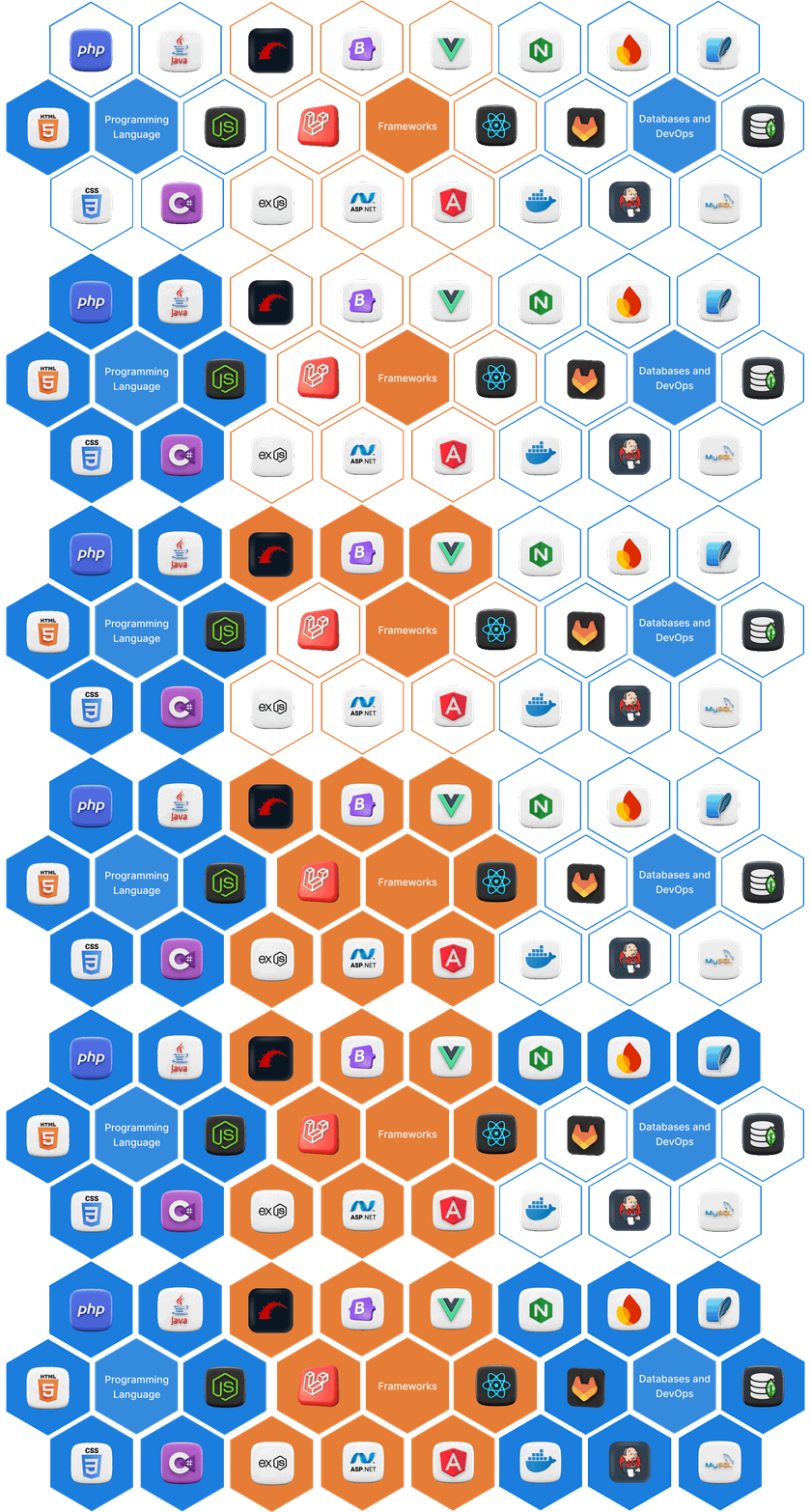
Our embedded system development relies on a robust technology stack combining microcontrollers, RTOS, and low-level programming for precision and performance. We integrate modern connectivity protocols, real-time systems, and secure architectures to meet diverse industry needs. From hardware design to cloud integration, our stack ensures scalability, reliability, and seamless operation.
AWS IoT

Azure IoT Hub

Google Cloud IoT
ARM Cortex
AVR

Microchip

Qualcomm

C, C++

Assembly

Embedded Rust

Zephyr RTOS

VxWorks

ThreadX
Tell us what you need — we’ll listen, ask the right questions, and gather key details.
Receive custom recommendations, estimates, and a clear path forward.
An Account Manager will reach out to align on timelines and next steps.

Faq